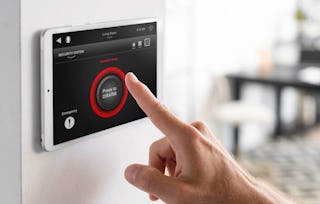
This course provides a comprehensive introduction to Building Management Systems (BMS), focusing on how modern buildings achieve efficient, automated, and centralized control of critical services. Across two modules, learners will explore the architecture of BMS, including field devices, controllers, and supervisory systems, as well as how different building services—such as HVAC, lighting, power monitoring, and utilities—are integrated into a unified platform.
Learners will develop the ability to understand data flow, control strategies, and communication protocols, enabling effective monitoring and optimization of building performance. The course also emphasizes how BMS contributes to energy efficiency, fault detection, and operational reliability.
By the end of the course, learners will be able to identify key components of a BMS, understand system integration, and apply control logic to improve building operations.
What makes this course unique is its system-level, integration-focused approach, moving beyond theory to demonstrate how multiple building systems work together through automation. It equips learners with practical knowledge relevant to smart buildings, energy management, and modern infrastructure design.
Target learners:
• Graduate engineers seeking practical knowledge in Smart Building Electrical & ELV systems.
• Design consultants and project engineers working on building and infrastructure projects.
• Commissioning, maintenance, and facility professionals involved in smart building technologies.
This module introduces the fundamentals of Building Management Systems (BMS) and their role in automating and optimizing building operations. It covers BMS concepts such as system topology, communication protocols, and integration of various building services. Learners will understand key components including sensors, controllers, valves, and actuators used to manage HVAC systems and other building utilities. The module also explains AHU and chiller plant monitoring, cooling control methods, and the role of BMS in improving energy efficiency, operational reliability, and occupant comfort in smart buildings.
涵盖的内容
5个视频2篇阅读材料2个作业3个插件
显示有关单元内容的信息
5个视频•总计28分钟
About the Specialization•3分钟
About the Course•4分钟
Topology and Protocols of BMS with Example •10分钟
System Components of BMS•7分钟
Typical Architecture of BIMS•4分钟
2篇阅读材料•总计20分钟
Chiller Plant Details •10分钟
Monitoring and other Details•10分钟
2个作业•总计60分钟
Assessment on Building Management System 1•30分钟
Building Management System 1•30分钟
3个插件•总计45分钟
Basics of Building Management System•15分钟
Methods on Cooling, Valves and Actuators•15分钟
Studying of Air Handling Unit •15分钟
Building Management System 2
第 2 单元•小时 后完成
单元详情
This module provides practical knowledge of HVAC automation systems and their integration with Building Management Systems (BMS). It covers HVAC equipment and field devices, control schemes for monitoring and regulating HVAC operations, and technologies such as chillers, VRV, and VAV systems used for efficient climate control. Learners will understand BMS architecture including controllers, I/O modules, communication protocols, and graphical monitoring interfaces for systems like AHU and chilled water networks. The module also highlights practical installation, cabling, shielding, and commissioning practices required for reliable HVAC automation in smart buildings.
涵盖的内容
14个视频2篇阅读材料2个作业
显示有关单元内容的信息
14个视频•总计100分钟
Study on Application of Building Management System •8分钟
HVAC System Equipment and Field Device Selection •7分钟
Basic Knwoledge on Control Scheme of HVAC System •8分钟
Study of Applications of Chillers and its Equipment •8分钟
Basic Knowledge on VRV and VAV and its Technologies•7分钟
Study on Water Supply System and its Applications•10分钟
Study of Various Systems and Interfaces •9分钟
Basic Knowledge on levels of BMS design •6分钟
Automation Controllers and I/O modules•6分钟
Basic Knowledge on Modules and Topologies of BMS System•7分钟
Basic Knowledge on BMS Protocols•8分钟
Study on Graphic Design for AHU, Chilled Water Schematic and Purpose of Schematic•5分钟
Introduction to Installation and Commissioning•7分钟
Larsen & Toubro popularly known as L&T is an Indian Multinational conglomerate. L&T has over 8 decades of expertise in executing some of the most complex projects including the World's tallest statue - the Statue of Unity. L&T has a wide portfolio that includes engineering, construction, manufacturing, realty, ship building, defense, aerospace, IT & financial services. L&T EduTech is a e learning platform within the L&T Group, that offers courses that are curated & delivered by industry experts.
In the world of engineering and technology, change and advancements are happening at the speed of light. Academia needs to keep pace with this change and career professionals need to adapt. This is the need gap L&T EduTech will fill. The vision for L&T EduTech is to be the bridge between academia and industry, between career professionals and ever-changing technology. L&T EduTech firmly believes that, only when these need gaps are filled, will we have truly empowered and knowledgeable workforce that will lead India in the future.
When will I have access to the lectures and assignments?
To access the course materials, assignments and to earn a Certificate, you will need to purchase the Certificate experience when you enroll in a course. You can try a Free Trial instead, or apply for Financial Aid. The course may offer 'Full Course, No Certificate' instead. This option lets you see all course materials, submit required assessments, and get a final grade. This also means that you will not be able to purchase a Certificate experience.
What will I get if I subscribe to this Specialization?
When you enroll in the course, you get access to all of the courses in the Specialization, and you earn a certificate when you complete the work. Your electronic Certificate will be added to your Accomplishments page - from there, you can print your Certificate or add it to your LinkedIn profile.
Is financial aid available?
Yes. In select learning programs, you can apply for financial aid or a scholarship if you can’t afford the enrollment fee. If fin aid or scholarship is available for your learning program selection, you’ll find a link to apply on the description page.