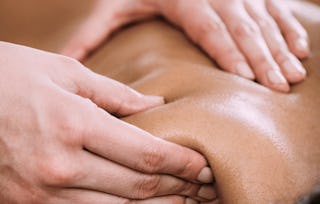
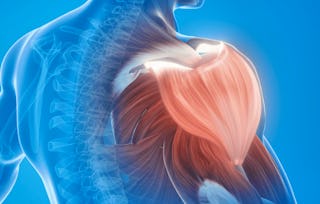
Stress, pain, posture, tension, and nervous system overload can all affect how the body feels, moves, and recovers. Craniosacral therapy uses gentle, precise touch to assess subtle restrictions and support the body’s natural ability to regulate, release tension, and restore balance. By the end of this course, learners will understand the foundations of craniosacral therapy and how it may be applied to support comfort, mobility, posture, and overall well-being.
Led by Kelly Saxton, ATC, this course introduces the anatomy and physiology of the craniosacral system, including cranial rhythms, fluid motion, tissue restriction, and the role of gentle palpation.
Through practical demonstrations and case discussions, learners explore how to listen through the hands, identify areas of restriction, apply integrative techniques, and support self-correction through subtle manual work.
Healthcare, bodywork, rehabilitation, and performance professionals will gain an accessible framework for adding craniosacral concepts to practice, while general learners will better understand how gentle touch therapies may support pain, stress reduction, and functional improvement.
In this module, instructor Kelly Saxton introduces Integrative Craniosacral Therapy and explains what makes this modality unique in clinical practice. Students learn that craniosacral therapy is a slow, light-touch manual therapy focused on influencing the central nervous system by working with the cranial bones, fascia, membranes, and cerebrospinal fluid rhythm. The course traces the origins of the work from Dr. William Sutherland in the early 1900s to Dr. John Upledger’s later contributions, including research and clinical applications with athletes, military programs, and neurological conditions. Kelly emphasizes that craniosacral therapy is grounded in anatomy and physiology, not mysticism: practitioners use bone movement, fascial relationships, and neurological responses to guide treatment. This module prepares learners to feel subtle rhythmic motion, understand the connection between cranial structures and the rest of the body, and begin thinking beyond symptom-based treatment toward whole-system assessment.
Module 2 focuses on treatment application and hands-on craniosacral methods. Students are guided through positioning, palpation, and techniques that influence structures such as the cranial membranes, ventricular system, dura mater, venous sinuses, and key cranial bones including the sphenoid, occiput, temporal bones, and hard palate. Kelly explains how to work with embryological sutures, the cranial base, TMJ, the hyoid system, and intraoral components that affect breathing, airway tension, and cervical mechanics. The module demonstrates how to sense different qualities of tissue—vascular, neural, fascial, or bony—and how to follow the system rather than force direction. Students learn how rhythm changes (“drop into the system”), subtle shifts, and intuitive tactile awareness guide treatment decisions. The module concludes with clinical reasoning strategies, patient communication, and ways to integrate craniosacral work with other modalities to become a more confident, perceptive, and effective therapist.
涵盖的内容
11个视频1篇阅读材料1个作业
显示有关单元内容的信息
11个视频•总计111分钟
Introduction to Treatment•25分钟
Retained Primitive Reflex Assessments•13分钟
Practical Application 1•9分钟
Practical Application 2•8分钟
Practical Application 3•12分钟
Practical Application 4•10分钟
Practical Application 5•4分钟
Tongue Work•4分钟
Traumatic Brain Injuries•13分钟
Practical Application 6•7分钟
Frequency of Treatment•5分钟
1篇阅读材料•总计10分钟
Student Learning Notes•10分钟
1个作业•总计20分钟
Practice Assignment - Module 2•20分钟
Course Summary and Exam
第 3 单元•小时 后完成
单元详情
This final exam is designed to assess your understanding of the key concepts presented throughout the course. Please review all video lessons and written materials before beginning. A passing score of 70% or higher is required to successfully complete the course and earn your CE certificate. You may reference your notes during the exam. Once you pass, your certificate will be available for immediate download.
Niel Asher Education is a world leader in evidence-based online education for massage therapists, manual therapists, and allied health professionals. Our mission is to empower practitioners worldwide with accessible, high-quality training that bridges traditional bodywork, modern rehabilitation, and integrative health science.
When will I have access to the lectures and assignments?
To access the course materials, assignments and to earn a Certificate, you will need to purchase the Certificate experience when you enroll in a course. You can try a Free Trial instead, or apply for Financial Aid. The course may offer 'Full Course, No Certificate' instead. This option lets you see all course materials, submit required assessments, and get a final grade. This also means that you will not be able to purchase a Certificate experience.
What will I get if I subscribe to this Specialization?
When you enroll in the course, you get access to all of the courses in the Specialization, and you earn a certificate when you complete the work. Your electronic Certificate will be added to your Accomplishments page - from there, you can print your Certificate or add it to your LinkedIn profile.
Is financial aid available?
Yes. In select learning programs, you can apply for financial aid or a scholarship if you can’t afford the enrollment fee. If fin aid or scholarship is available for your learning program selection, you’ll find a link to apply on the description page.