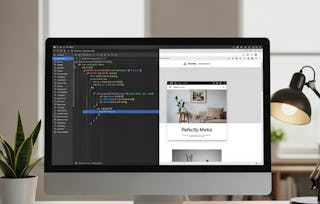
In this course, you will learn how to use CSS to control the appearance, layout and responsiveness of web pages. Through interactive, guided lab activities on Coursera, you will style existing HTML pages and build responsive layouts using modern techniques such as CSS Grid, ensuring your designs work well across a range of screen sizes and devices.
只需 199 美元(原价 399 美元)即可通过 Coursera Plus 学习更高水平的技能。立即节省

您将获得的技能
要了解的详细信息
了解顶级公司的员工如何掌握热门技能

积累特定领域的专业知识
- 向行业专家学习新概念
- 获得对主题或工具的基础理解
- 通过实践项目培养工作相关技能
- 获得可共享的职业证书

该课程共有4个模块
This week, you will begin working with CSS, the language that controls the look and layout of web pages. You’ll start by exploring the basics of CSS and how it applies styles to HTML, then practise using it to change colours, fonts, and spacing. Next, you’ll move on to CSS Grid, a powerful tool for creating responsive layouts that adapt to different screen sizes. By the end, you’ll understand how CSS works, how to structure responsive designs, and how to use grids effectively to create modern, professional web pages.
涵盖的内容
2个视频6篇阅读材料1个作业3个非评分实验室
This week, you will learn what web accessibility means and why it is essential for inclusive design. You’ll start by exploring the definition of accessibility and see how assistive technologies, such as screen readers, help users navigate websites. Through guided labs, you’ll experience common accessibility challenges, such as visual impairments, and learn techniques to make your pages more usable for everyone. You’ll also examine the business case for accessibility, understanding its impact on user experience and organisational success. By the end, you’ll understand both the practical steps and the ethical and commercial reasons for making websites accessible.
涵盖的内容
3个视频2篇阅读材料4个作业
This week, you will learn how to evaluate and improve the accessibility of websites. You’ll start by using automated tools to test for common accessibility issues, then explore practical steps to fix these problems. You’ll apply accessibility principles to real HTML examples, ensuring your pages meet standards for usability and inclusivity. By the end, you’ll be able to identify accessibility issues, correct them, and understand why accessibility is essential for ethical and professional web design.
涵盖的内容
3个视频3个作业1个非评分实验室
This week, you’ll learn advanced CSS techniques to make your designs more dynamic and efficient. You’ll work with CSS variables for reusable themes, add transitions and simple animations, use advanced selectors and pseudo-elements, and explore modern layout tips. You’ll also cover performance best practices and optimise your CSS for accessibility. Finally, you’ll apply everything in a capstone project to create a polished, professional design.
涵盖的内容
4个视频1篇阅读材料3个作业2个非评分实验室
获得职业证书
将此证书添加到您的 LinkedIn 个人资料、简历或履历中。在社交媒体和绩效考核中分享。
位教师

从 Mobile and Web Development 浏览更多内容
状态:免费试用Scrimba
状态:免费试用
状态:免费试用
人们为什么选择 Coursera 来帮助自己实现职业发展


常见问题
To access the course materials, assignments and to earn a Certificate, you will need to purchase the Certificate experience when you enroll in a course. You can try a Free Trial instead, or apply for Financial Aid. The course may offer 'Full Course, No Certificate' instead. This option lets you see all course materials, submit required assessments, and get a final grade. This also means that you will not be able to purchase a Certificate experience.
When you enroll in the course, you get access to all of the courses in the Specialization, and you earn a certificate when you complete the work. Your electronic Certificate will be added to your Accomplishments page - from there, you can print your Certificate or add it to your LinkedIn profile.
Yes. In select learning programs, you can apply for financial aid or a scholarship if you can’t afford the enrollment fee. If fin aid or scholarship is available for your learning program selection, you’ll find a link to apply on the description page.
更多问题
提供助学金,
¹ 本课程的部分作业采用 AI 评分。对于这些作业,将根据 Coursera 隐私声明使用您的数据。