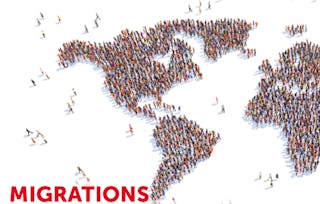
Migration to and within Europe poses particular issues related to ensuring equitable access to healthcare. Throughout this course, you will gain insight into the root causes and types of migration, the current evidence and state of data in the region, examples of good practice, and how migration health can be studied and new evidence generated and translated into policy and practice.

Migration, Health and Equity in Europe

您将学到什么
definitions and legislation surrounding migrants in Europe
misconceptions about migrants' health
priorities and good practices for protecting and promoting the health of migrants in Europe
您将获得的技能
- Health Systems
- Health Care
- Demography
- Community Health
- Healthcare Ethics
- Public Health
- Research Methodologies
- Cultural Sensitivity
- Clinical Research Ethics
- Health Disparities
- Data Collection
- Cultural Responsiveness
- Immigration Law
- Health Care Procedure and Regulation
- Epidemiology
- Research
- Health Equity
- Health Policy
- Social Determinants Of Health
要了解的详细信息

可分享的证书
添加到您的领英档案
作业
23 项作业
授课语言:英语(English)
91%
of learners achieved a positive career outcome
了解顶级公司的员工如何掌握热门技能

该课程共有5个模块
In this first module, we dive right into the root causes of migration to and within Europe, asking who, why, and where. We will explore patterns of transitions taken by people on the move and how they impact people's health. Together, we will round the module up by examining key terminologies around migration, going beyond their definitions to discuss their role in shaping how people perceive the challenges and potential solutions around migration, health, and equity.
涵盖的内容
7个视频5篇阅读材料3个作业1个应用程序项目1个讨论话题
7个视频•总计29分钟
- MOOC trailer•2分钟
- Welcome to this MOOC•2分钟
- Welcome to Module 1•2分钟
- Introduction to migration: root causes of migration and the various situations•6分钟
- Political climate surrounding migration in Europe•9分钟
- Why terminology matters•6分钟
- Summary of Module 1•2分钟
5篇阅读材料•总计37分钟
- Course Information•10分钟
- 📢 Important preliminary information: Evaluations and subtitles•5分钟
- List of acronyms•2分钟
- Migration to and within Europe: who, why and where?•10分钟
- Terminology•10分钟
3个作业•总计34分钟
- Root causes of migration•10分钟
- Definitions•6分钟
- End of module quiz•18分钟
1个应用程序项目•总计4分钟
- Push and pull factors relating to migration•4分钟
1个讨论话题•总计10分钟
- Share your expectations•10分钟
In this module, our focus is on the status quo of the health risks and the health service delivery that refugees and migrants face in Europe. We are guided by the question: "What do we know about the health of refugees and migrants in Europe?" Building on up-to-date evidence, we explore the key health risks that migrants face and how their impacts shape differences in their health outcomes compared to host populations. This journey will lead us to understand the variability in healthcare provision across Europe and the importance of universal health coverage (UHC) and evidence-based guidelines. Finally, we will walk through where and how to find migrant health data and zoom in on its limitations and existing gaps.
涵盖的内容
8个视频10篇阅读材料5个作业2个插件
8个视频•总计66分钟
- Welcome to Module 2•3分钟
- Misconceptions about health risks in migrant populations•11分钟
- What healthcare is provided to undocumented migrants in Europe?•9分钟
- UHC for undocumented migrants: where are we today?•19分钟
- Access to immunization and vaccine equity•11分钟
- Data and data sources in migration and health•6分钟
- Integration of migrant and refugee data in health information systems in Europe•6分钟
- Summary of Module 2•3分钟
10篇阅读材料•总计106分钟
- Health status of migrants in the WHO European Region•10分钟
- Health consequences of detention and border violence•15分钟
- UHC for undocumented migrants in the WHO European region•15分钟
- Mental health services•10分钟
- Oral health among refugees and asylum seekers•15分钟
- Ensuring financial protection for migrants•10分钟
- Immunization of migrants in Europe: a brief summary of policies and practices•10分钟
- The importance of data and data protection•6分钟
- Overview of health and data guidelines at European level•10分钟
- Main actors involved in publishing migrant health guidance at European level•5分钟
5个作业•总计60分钟
- Health risk misconceptions•10分钟
- Access to health services and care•8分钟
- Access to vaccines•10分钟
- Understanding migrant health data and health information systems•12分钟
- End of module quiz•20分钟
2个插件•总计9分钟
- Invisible Suffering of Migrants & Asylum Seekers •6分钟
- Migrant health data collection - leaving no one behind•3分钟
In this module, we will explore common barriers that migrants, refugees and other displaced populations experience in Europe when it comes to their health. Together we will break these down into distinct categories to better understand the various types of barriers that impact health outcomes and health service utilization. We will deep-dive into some of the most impactful examples of barriers, including the role of European and international legislation and policies, of discrimination, racism, and xenophobia, and of people's health (system) literacy. This module will sharpen our understanding of the existing gaps in Europe which is essential before progressing to our next module on how to best address them.
涵盖的内容
10个视频6篇阅读材料6个作业1个插件
10个视频•总计75分钟
- Welcome to Module 3•2分钟
- Types of barriers•8分钟
- Barriers to health faced by refugees in Greece•7分钟
- The right to healthcare: refugees and asylum seekers•10分钟
- The right to healthcare: undocumented migrants•11分钟
- Refugee health in Europe•7分钟
- How do racism and xenophobia affect migrant health in Europe?•10分钟
- Health system barriers•8分钟
- Health literacy and illness perception•9分钟
- Summary of Module 3•3分钟
6篇阅读材料•总计58分钟
- Impacts of migration on health service access•8分钟
- European policies•10分钟
- Discrimination, racism and xenophobia experienced by migrant groups in Europe•10分钟
- Overview of health system barriers at different entry points•10分钟
- Health literacy and language barriers•10分钟
- Illness perception•10分钟
6个作业•总计53分钟
- Identifying types of barriers to health•5分钟
- Legal bariers to health•10分钟
- Countering discrimination, xenophobia and racism•6分钟
- Health system barriers•6分钟
- Health literacy and language barriers•6分钟
- End of module quiz•20分钟
1个插件•总计8分钟
- Promoting health literacy through community health workers among the refugee population in Malaysia•8分钟
In this fourth module, we shift gears by moving from analysing existing challenges to exploring potential solutions towards migration and health equity for all. We will start from exploring the fundamentals of migrant-sensitive and culturally-appropriate care. These themes are then put into practice by following several good practice examples which were selected from a range of actors and contexts in Europe. Through this module, you will not only take away practical tools to addressing these challenges but also - hopefully - an inspiring sense of what is possible when different actors come together to work towards a common goal.
涵盖的内容
10个视频8篇阅读材料5个作业1个讨论话题1个插件
10个视频•总计72分钟
- Welcome to Module 4•2分钟
- Culturally appropriate care and language•15分钟
- Integrated care•5分钟
- Good practices for immunization•10分钟
- The importance of CSOs for promoting and protecting refugee and migrant health in Europe•7分钟
- Health education in refugee camps: the work of InZone•3分钟
- The role of health professionals•9分钟
- Primary care provision: a specialised department in Geneva•10分钟
- Norway: integration for health projects as a way to reduce health inequalities among migrants•8分钟
- Summary of Module 4•3分钟
8篇阅读材料•总计80分钟
- Migrant-sensitive healthcare•10分钟
- Priority setting and migration health policies in Europe•5分钟
- Catch-up vaccination•10分钟
- Overview of the various roles of CSOs•10分钟
- Good practices for health professionals•10分钟
- Sexual violence in migration•15分钟
- Role of peer support for Hepatitis C elimination•10分钟
- Cultural competency training in higher education•10分钟
5个作业•总计40分钟
- Migrant-sensitive and culturally appropriate healthcare•4分钟
- Priority interventions and strategies•4分钟
- The role of CSOs•4分钟
- Overcoming obstacles to primary care•6分钟
- End of module quiz•22分钟
1个讨论话题•总计10分钟
- Reflection: share a good practice example from your country or work•10分钟
1个插件•总计15分钟
- Volunteers in Poland: a good practice shared by UNHCR•15分钟
In this final module, our focus shifts forward to actionable evidence-based practice and policies. Together, we will consider the role of data and research in informing all our actions as practitioners, policymakers, or researchers. We will explore some of the notable initiatives and data platforms. Finally, we will explore ways to translate evidence into practice, including through the use of participatory research methods. Throughout this module, we tie together the content and skills covered in this MOOC and provide a positive outlook to the future.
涵盖的内容
9个视频6篇阅读材料4个作业1个应用程序项目1个讨论话题
9个视频•总计56分钟
- Welcome to Module 5•2分钟
- The WHO Global Research Agenda on health, migration and displacement•12分钟
- Introduction to various research methods•10分钟
- What is participatory research?•11分钟
- Introduction to European data sources•7分钟
- Translating evidence into policy and practice•7分钟
- European research network: What is Lancet Migration?•4分钟
- Summary of Module 5•1分钟
- Farewell•2分钟
6篇阅读材料•总计55分钟
- More details about the WHO Global Research Agenda•10分钟
- Types of research•10分钟
- Participatory health research methods•10分钟
- Overview of data portals•10分钟
- Resources from the European Centre of Disease Control and Prevention•10分钟
- List of European networks•5分钟
4个作业•总计39分钟
- Research priorities•4分钟
- Data finding exercise•5分钟
- Knowledge translation•6分钟
- End of module quiz•24分钟
1个应用程序项目
- Activity: Limitations of research methods•0分钟
1个讨论话题•总计5分钟
- Reflect on your learning•5分钟
位教师


授课教师


提供方

提供方

University of Geneva
Founded in 1559, the University of Geneva (UNIGE) is one of Europe's leading universities. Devoted to research, education and dialogue, the UNIGE shares the international calling of its host city, Geneva, a centre of international and multicultural activities with a venerable cosmopolitan tradition.
从 Public Health 浏览更多内容
 I
IImperial College London
课程
 S
SSciences Po
课程
 U
UUniversity of Copenhagen
课程
 P
PPolitecnico di Milano
课程
人们为什么选择 Coursera 来帮助自己实现职业发展

Felipe M.
自 2018开始学习的学生
''能够按照自己的速度和节奏学习课程是一次很棒的经历。只要符合自己的时间表和心情,我就可以学习。'

Jennifer J.
自 2020开始学习的学生
''我直接将从课程中学到的概念和技能应用到一个令人兴奋的新工作项目中。'

Larry W.
自 2021开始学习的学生
''如果我的大学不提供我需要的主题课程,Coursera 便是最好的去处之一。'

Chaitanya A.
''学习不仅仅是在工作中做的更好:它远不止于此。Coursera 让我无限制地学习。'
通过在线学位推动您的职业生涯
获取世界一流大学的学位 - 100% 在线




常见问题
To access the course materials, assignments and to earn a Certificate, you will need to purchase the Certificate experience when you enroll in a course. You can try a Free Trial instead, or apply for Financial Aid. The course may offer 'Full Course, No Certificate' instead. This option lets you see all course materials, submit required assessments, and get a final grade. This also means that you will not be able to purchase a Certificate experience.
When you purchase a Certificate you get access to all course materials, including graded assignments. Upon completing the course, your electronic Certificate will be added to your Accomplishments page - from there, you can print your Certificate or add it to your LinkedIn profile.
Yes. In select learning programs, you can apply for financial aid or a scholarship if you can’t afford the enrollment fee. If fin aid or scholarship is available for your learning program selection, you’ll find a link to apply on the description page.
更多问题
提供助学金,